
If you have looked closely at functional mushroom supplements, you have probably seen terms like fruiting body, mycelium, extract, beta-glucans, and sometimes mycelial biomass.
The fruiting body and the mycelium are both parts of the same fungus. The useful question is not simply which one is "good" or "bad." It is what fungal material is actually in the supplement, how it was grown, how it was processed, and what the finished ingredient is standardized to contain.

What is the fruiting body?
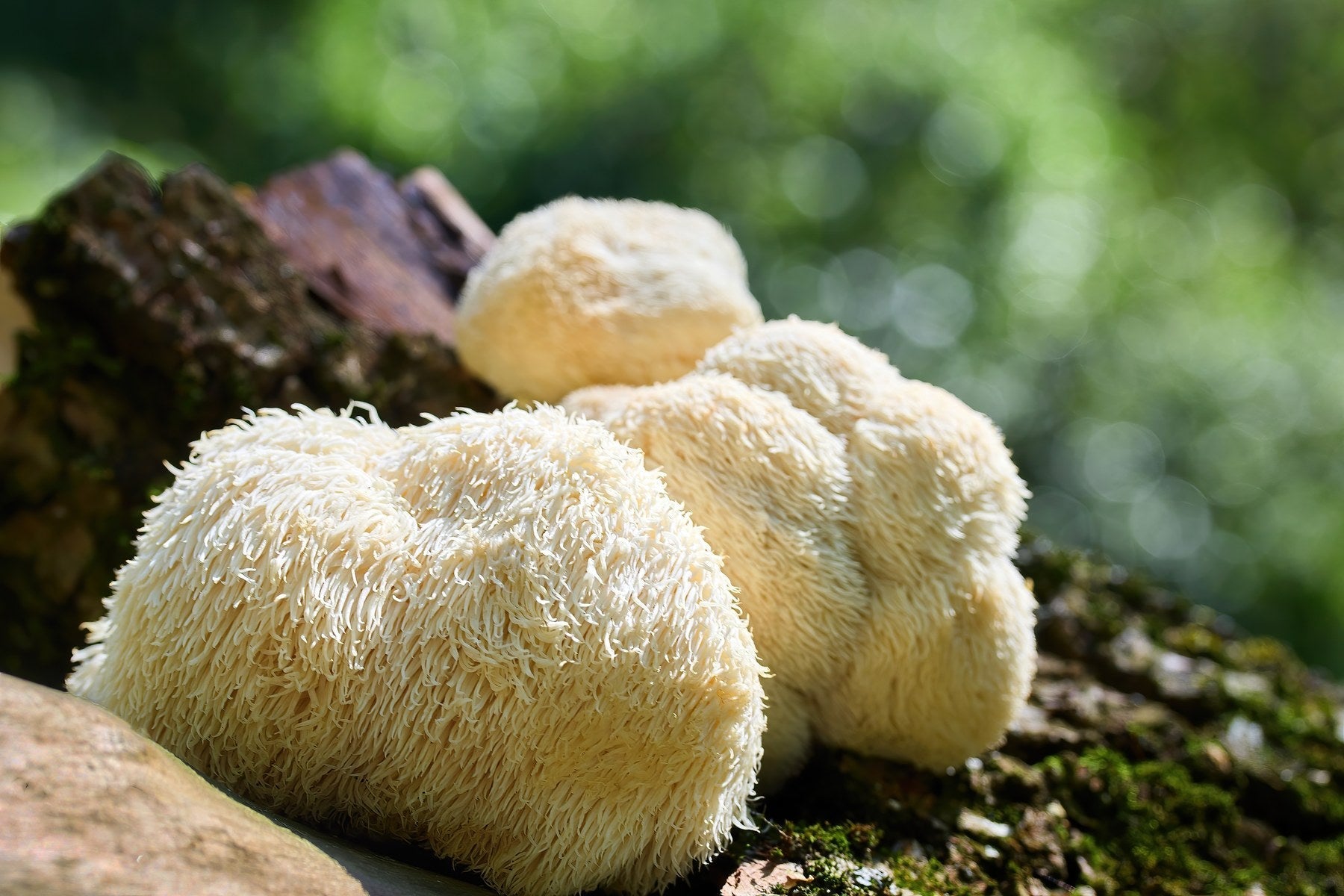
The fruiting body is the recognizable mushroom - the structure that emerges from wood, soil, or another growing medium and produces spores.
Fruiting bodies contain beta-glucans and other naturally occurring mushroom compounds. Their composition varies by species, which is one reason a Lion's Mane extract and a Turkey Tail extract should not be treated as interchangeable.

What is mycelium?
Mycelium is the network of microscopic fungal threads, called hyphae, from which the fruiting body develops.
Mycelium itself is not inherently useless. It is genuine fungal tissue, and research has identified biologically interesting compounds in both mycelia and fruiting bodies. The bigger supplement question is how that mycelium was produced and what remains in the finished ingredient.
Mycelium is not the same thing as mycelium on grain
A common commercial method grows mycelium through rice, oats, sorghum, or another grain. When the mycelium and grain are harvested together, the finished material can contain both fungal tissue and substantial amounts of residual substrate.
That matters because grain contributes starch and other alpha-glucans. Alpha-glucans are chemically different from the fungal beta-glucans commonly used as a quality marker in mushroom extracts.
Recent analytical work in the Journal of AOAC International highlights this challenge: grain-fermented fungal products can contain a starch-rich matrix that complicates meaningful glucan measurement. That is why distinguishing beta-glucans from alpha-glucans is more informative than relying on a broad carbohydrate or total-polysaccharide number.
What does “mycelial biomass” mean?
The term mycelial biomass does not automatically mean mycelium grown on grain. Mycelium can also be produced through submerged or liquid fermentation, where fungal cells grow in a liquid nutrient medium rather than through a solid grain substrate.
But when a label uses terms such as mycelial biomass, myceliated grain, or mycelium grown on rice, the term alone does not tell you whether substrate remains in the final material. The useful question is what the biomass was grown on and what was harvested.
Why the substrate matters
Residual grain is not inherently dangerous. The issue is identity and concentration. If a meaningful portion of the finished ingredient is cultivation substrate, then part of what you are consuming is not fungal material.
This is also why a broad "total polysaccharides" number may be less informative than a specific beta-glucan measurement. Grain starch can contribute to broad carbohydrate measurements without telling you how much fungal beta-glucan is present.
What should you look for?
- What part of the fungus is used - fruiting body, mycelium, or both?
- If mycelium is used, what was it grown on?
- Does the cultivation substrate remain in the finished ingredient?
- Is the ingredient an extract?
- What extraction method is used?
- Does the manufacturer disclose beta-glucan content rather than only total polysaccharides?
How Noomadic approaches mushroom extracts
Noomadic uses fruiting-body mushroom extracts only. Our mushroom ingredients use hot-water extraction, and all mushroom extracts used in our mushroom supplements are standardized to 30% Beta-D-Glucans.
The bottom line
The old fruiting-body-versus-mycelium debate is more nuanced than saying one part of a fungus works and the other does not.
Both are fungal material. What matters for a supplement is transparency: what was grown, what was harvested, whether substrate remains, how the material was extracted, and what the ingredient is standardized to contain.
Learn what is behind your supplements - not just what is on the front of the bottle.
Sources
Selected references supporting this article: